Spinybacked Orbweaver Bite: Symptoms & Treatment (2026)
Does a spinybacked orbweaver bite actually hurt? For most people, barely — the sensation is closer to a mild bee sting than anything alarming, and the spider itself would rather drop off its web and hide than confront you. Its spiky, crab-shaped body looks far more dangerous than its bite actually is.
What the spinybacked orbweaver bite looks like
Because their fangs are small and rarely break skin, a spinybacked orbweaver bite tends to register as a quick, sharp pinch rather than a deep or lingering pain. Most people who are actually bitten notice it immediately — there's no delayed-onset numbness or painless puncture the way there is with some other spiders.
The visible mark is usually a small, mildly red or pink bump, sometimes with a bit of surrounding swelling, roughly comparable to a mosquito bite or a light bee sting. There's no consistently reported halo, blister, or ulcer pattern tied to this species — if you're seeing a spreading dark patch or an open sore, that points toward a different cause and deserves medical attention rather than a wait-and-see approach.
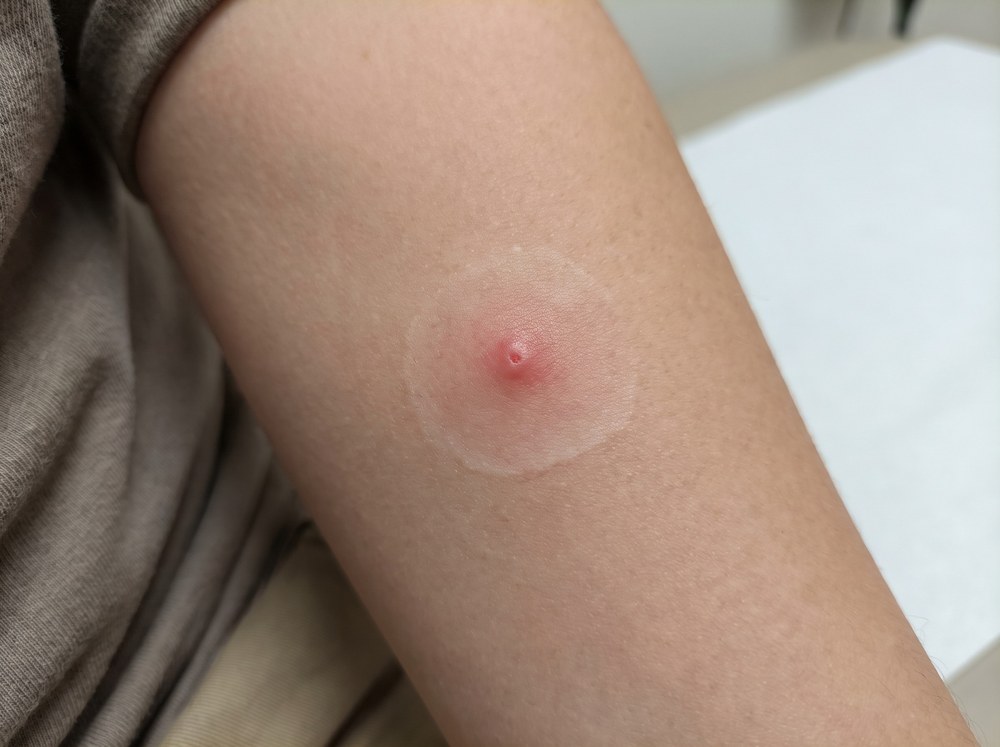
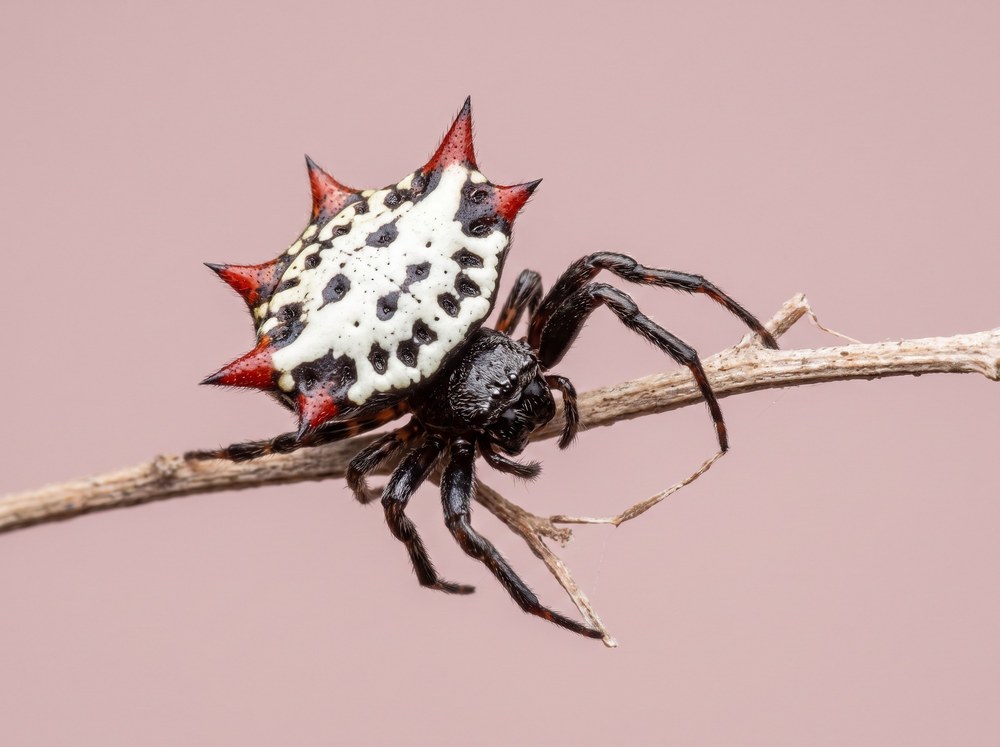
Given how nonspecific the mark looks, it's easy to misattribute a spinybacked orbweaver bite to a mosquito, flea, or even a scratch from the spider's own spines rather than an actual bite. For a closer look at how this species compares to its relatives, the illustrated Insectio profile of the spinybacked orbweaver walks through its coloring, size, and web habits in more detail.
Most people only connect the dots after spotting the distinctive white, black, or red spiny web-dweller nearby — the spider is far more recognizable than anything its bite leaves behind.
Bite Symptom Checker
Check every symptom you're currently experiencing. Get a plain-English risk read.
Is it dangerous?
The vast majority of spinybacked orbweaver bites resolve on their own within a day or two with no treatment beyond basic home care. This species is not considered medically dangerous to humans, and its venom — while effective on the small insects it hunts — isn't potent enough to cause the kind of tissue damage or systemic reaction associated with medically significant spiders.
The worst-case outcome people search for with any spider bite is usually a severe allergic reaction or a necrotic wound, and neither is a documented feature of this species' bite. No fatalities have been documented, and serious complications are, by every available account, extremely rare rather than a realistic concern for most people.
Anyone can have an individual allergic reaction to an insect or spider bite regardless of the species involved, so children, people with known insect-venom allergies, and anyone who has had a severe reaction to a bite or sting before should treat unexpected swelling or breathing changes more cautiously than the general population would.
Bottom line: monitor the area for the first 24 to 48 hours. If it's still just a small, fading red mark by then, you're in the ordinary outcome. If redness is spreading, you develop a fever, or you notice swelling of the face or throat or trouble breathing, escalate to medical care rather than waiting it out further.
Wondering how serious yours actually is?
Run the Symptom CheckerSymptom timeline
Hours 0–2. A brief, sharp pinch at the moment of the bite, followed by a small red mark and mild localized pain — most people describe it as feeling like a light bee sting.
Hours 2–8. Slight swelling and itching may develop around the mark, and mild numbness or tingling can linger, but the discomfort generally stays mild and localized.
Day 1–2. Redness and swelling, if present, typically peak in this window and then start fading. This is also the point where any unusual escalation — spreading redness, fever, worsening pain — should stand out clearly against the normal, quiet resolution most bites follow.
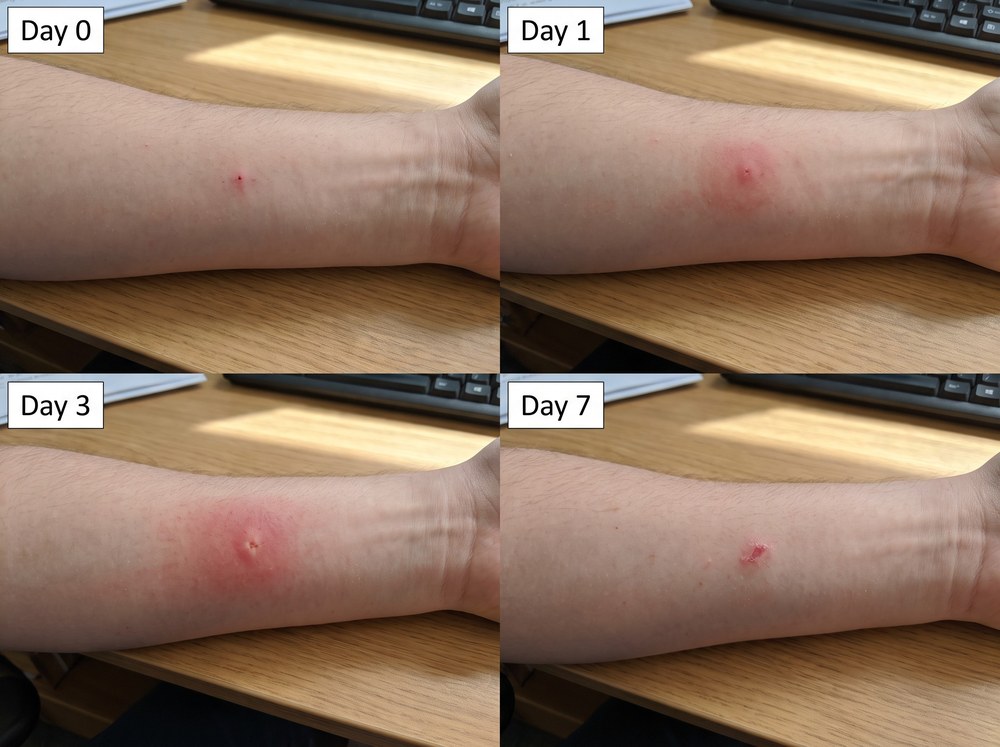
Day 3–7. In the ordinary course, the mark fades completely without any treatment beyond basic home care. If the bite is still enlarging, newly painful, or accompanied by fever at this point, that's outside the expected pattern for this species and warrants a medical evaluation rather than more waiting.
Which Bug Bit Me?
Not sure it was a spinybacked orbweaver? Answer three questions and we'll narrow the list.
For a broader visual sweep against thousands of other species, a free bug id lookup can help confirm what you're dealing with.
Treatment
Wash and elevate. Clean the bite with soap and water, then elevate the area if it's on an arm or leg to help limit swelling. If you're not fully sure what bit you, the BugKnow app to identify a spinybacked orbweaver instantly can help confirm the culprit before you decide how aggressively to treat it.
Cool, don't warm. A cold compress in short intervals is the right call here — it reduces pain and swelling. Heat isn't recommended for this kind of defensive bite and won't speed healing.
OTC support. An oral antihistamine or a standard pain reliever like acetaminophen or ibuprofen handles most of the discomfort. Hydrocortisone cream can help if itching becomes the main complaint.
Watch, don't wrap. Avoid bandaging the area tightly. Keep an eye on size and color for 24 to 48 hours, and escalate to medical care if redness spreads well past the original mark or you develop a fever.
Prevention
Most bites happen when someone accidentally walks into a web strung across a garden path, doorway, or between shrubs and the spider gets pinned against skin or clothing. Checking overhead and around doorways before pushing through foliage, especially in fall when this species is most active, cuts down on accidental contact.
Outdoor lighting attracts the small flying insects these spiders feed on, so swapping bright white bulbs for yellow "bug lights" near entryways can reduce how many webs show up close to your home in the first place. Regularly knocking down webs you find on porches, windows, and patios also discourages rebuilding in high-traffic spots.
If you've spotted more than one of these spiders repeatedly rebuilding webs right around your home, a full outdoor inspection is warranted.
Wondering whether to head to urgent care?
Walk Through the Decision TreeShould You See a Doctor?
A short decision tree based on CDC and Mayo Clinic guidance.
1 / 3 Is the bite area swelling rapidly, spreading well beyond the original site, or is your face, lips, or throat swelling?
2 / 3 Are you experiencing difficulty breathing, dizziness, or a rapid heartbeat since the bite?
3 / 3 Has the redness or discomfort been getting steadily worse for more than 48 hours?
Frequently asked questions
Does a spinybacked orbweaver bite hurt?
Most bites feel like a brief, sharp pinch similar to a mild bee sting. That's because a spinybacked orbweaver's fangs are small and rarely break human skin unless the spider is pressed hard against you. Pain typically fades within minutes to an hour on its own. Lasting or worsening discomfort beyond that window is uncommon for this species and worth keeping an eye on.
What does a spinybacked orbweaver bite look like?
A bite usually looks like a small, mildly red or pink bump, sometimes with slight swelling around it, much like a mosquito or bee sting mark. There's no documented bull's-eye pattern, blister, or ulcer associated with this species. Because the mark is so nonspecific, many people don't realize a spider caused it until they spot a web nearby.
How do I tell a spinybacked orbweaver bite from a Micrathena or Argiope bite?
All three produce a similarly mild, bee-sting-like mark, so the wound itself won't tell you much. Identification comes from the spider, not the bite: Micrathena has a taller, more angular spiny abdomen, Argiope (the yellow garden spider) is much larger with a bold zigzag web, and the spinybacked orbweaver has a flat, wide, crab-shaped body with short blunt spines.
Are spinybacked orbweavers aggressive toward humans?
No. They're considered docile and non-aggressive, and they typically only bite when trapped, squeezed, or handled roughly. Their first response to disturbance is usually to drop from the web or try to escape rather than defend themselves. Most reported bites happen when someone accidentally walks into a web and the spider ends up pinned against skin or clothing.
How long until I know if a spinybacked orbweaver bite is serious?
Most bites resolve within a few hours to a couple of days without treatment. Watch the area for the first 24 to 48 hours. If redness keeps spreading well beyond the original bite, or you develop fever, spreading swelling, or difficulty breathing, those are signs it's time to see a doctor rather than continuing to wait it out at home.
Can spinybacked orbweavers bite through clothing or get inside my house?
Their fangs are small and generally can't penetrate clothing, so bites almost always occur on bare skin that contacts the web directly. These spiders rarely come indoors on their own; they build webs outdoors in shrubs, trees, and doorway corners, though they're occasionally carried inside on potted plants or other items brought in from outside.
What do university entomologists say about spinybacked orbweaver bites?
University of Florida entomologists, who maintain one of the most detailed profiles of this species, note it's easily distinguished from every other spider in the state, and their Featured Creatures spider profile describes it as harmless to people despite its intimidating spines. Their research focuses on identification and biology rather than medical risk, since bites are rarely reported and not considered a health concern.
Are the spines on a spinybacked orbweaver dangerous too?
The spines aren't venomous, but they're stiff and can poke or scratch skin if the spider is squeezed or handled carelessly, causing a minor puncture separate from any bite. This is generally more of a minor annoyance than a health risk. Washing any scratch with soap and water is enough for the vast majority of cases.
Take 30 seconds to check your bite now.
Check My Symptoms